Why I did what I did…I think.

Posted: 14th December 2009 by admin in Uncategorized

Ever since I found out about my ‘terminal uniquess syndrome’ (a term I also just found out about and will cling on to til the day I die!) I’ve been analyzing the decisions I’ve made in my life since my culture switch took place when I was 15. Like Wendy wrote in her blog, it is about acceptance, and once I learn to accept the impact this move had on my life, I can truly understand who I am. Without jumping too much in the lake of me, though, I’d like to share a discovery I’ve made about one of the most important decisions in my life as an adult. My American citizenship renunciation.

My decision to renounce my American nationality was hardly a decision at all, in retrospect. I had been living in the Netherlands for 8 years, initially under my dad’s work visa, then a study visa when I attended art school. I maintained my visa every year by going to the alien department of city hall in the various cities I lived in, and didn’t really give much thought to which nationality I possessed. I was too busy growing up – studying, going out, moving into my own place and trying to make rent, essentially building my identity. My citizenship was the last thing on my mind, not in the slightest a reflection of who I was.

That changed when I stopped studying though. My visa was no longer valid and I was threatened wth deportation. Suddenly, I was unwanted in the society I had worked so hard to be a part of. Not only did I not want to be separated from my family, who were all residing and working in the Netherlands at the time, but the idea of returning to my native country where I had no idea how to participate in as an adult scared me to death.

I wanted to become a dual citizen, so I started the long naturalization procedure to apply for Dutch nationality in 1999. It was not only my goal but my passionate desire to assimilate to the point of being indistinguishable from a Dutch native. Little did I know, the Dutch government abolished dual-citizenship the year before! Once my application for Dutch citizenship had finally gone through, I was faced with the choice: become Dutch and renounce my American nationality, or remain American and be deported.

Before I knew anything about the Third Culture Kids phenomenon, I justified my decision to renounce with a) family unity, b) pressure from the Dutch goverment and c) economic destitution if I did not. But now I think a fourth factor was in play, namely a sort of indifference to my nationality. I knew I was American because I was born there, because I had an American accent, because we celebrated things like Thanksgiving and the Fourth of July. But I lacked any deep-rooted attachment to that country apart from some childhood memories and sentiments.

At the end of the day, what was most important to me was staying where I was at the time, and I did what I had to do to achieve that. Only now do I understand the full consequences of my renunciation, and although I can’t say I regret my decision, it was a choice I never wanted to make.

To this day, when I look in my passport and see ‘Birthplace: Henrietta, NY USA’, it means nothing to me. I’ve never been to that place, and will most likely never step foot there, and yet it is the place where I breathed life for the very first time. Does that mean it has any bearing on who I am today? Yes and no. It tells me, I am the product of my experiences, not my birthplace. That I am an individual capable of stretching across borders and coming out unscathed! That I am indeed terminally unique, just as unique as anyone else, and that the only thing that can define who I am is me.
My Not-So-Unique Journey

Posted: 13th December 2009 by admin in Uncategorized

I’m slightly different than the majority of stories I’ve read in this community. Most are global experiences. I’m a domestic TCK within Canada so my patriotic ties are indisputable. I attended 9 schools–in some cases, moving from one side of a city to another or one side of the country to another–before I graduated high school. (If you know anything about Canada, our depth of multiculturalism is as wide as our land mass.) My family never stayed longer than 2.5 years in any place and when I did have the opportunity to stay, I just didn’t know how. It caused me great distress when I couldn’t move. I became very claustrophobic…anxious…that I found ways to move. That pattern has unknowingly followed me into my adulthood…

It’s interesting analyzing the choices and the seemingly innate reasons driving those choices in hindsight. I have a mish-mash of academics behind me that serve as a reminder to that driving force. When I could no longer move physically as I’d chosen to marry a firmly rooted individual, my mind transported itself from one new experience to the next through the acquisition of intellectual enhancement. There wasn’t a time throughout my 11 years of marriage that I wasn’t in school learning about something. Intellectual property takes on a whole new meaning when I consider society’s definition of “roots”.

At any rate, I consider myself pretty self-aware but up until the last few months, I had no idea I attended 9 schools from K-12, let alone that my need for change and diversity had a root cause called TCK! I thought I was just different. “Diverse” I didn’t realize that my uncomfortableness about how to respond to “where are you from?” wasn’t all that unique! Now as an adult who has children of her own, stability is a very conscious concept and I constantly find myself asking, “AM I confusing stability with stagnation?” before pursuing change. Is it my ‘uniqueness’ that wants this is or is this a relevant reason to create disruption?

When I made the realization and ‘confronted’ my mother about it (I was slightly angry), she referred to my experience as “You’re just like a military brat!” and that opened the doors to learning about all of you…and me. However, I think the mind and the spirit is an awe-inspiring thing. It amazes me that even if we have the smallest inkling of curiousity about why things are the way they are, the universe will present ways to explore and heal by sending us opportunities to do so. I had been doing a lot of “the work” already by following that intuitive feeling we all naturally seem to possess…

Prior to being introduced to the TCK community, I started a project to learn about myself and others…. www.justjaylyn.com . Everything in that site is me from picture choice to words to colours, etc…I found that I learned more about myself by listening to other’s stories as their projections became reflections of my own unique complexities…

Anyway, that’s my story summed up, neat and tidy.
I think that’s the most I’ve shared with respect to acknowledging my developmental years.

I think when we embrace who we are and focus on the things we’ve gained as opposed to the things we believe we’ve lost (certain voids will always exist–we can’t go back to correct), we find peace. And with that inner peace, we find acceptance. And with acceptance, we’re able to transcend the intangible boundaries we’ve come to rely on to keep us isolated. No one is trying to keep us out except maybe ourselves. We belong everywhere…at least, I believe so.

Rootlessness isn’t a bad word……

Posted: 13th December 2009 by admin in Uncategorized

Many images are evoked when someone mentions the word “life”. Mine has been one of constant change. I have placed my temporary roots over the stretch of three continents, lived in almost thirty different houses and visited even more countries while travelling or backpacking. It is safe to say that I have not known the meaning of the word “home”, at least in the conventional understanding of the word, the one house or place which you grow up in or return to when away, that house with familiar photos on the wall, familiar smells and feelings.
Home to me has always been the feeling or connection I get when around a select group of people, obviously my family, but also other TCK’s with whom you skip the irritations of explanations and get straight to the meat of the conversations and memories. It has also been the couch in a friend’s house, a hotel room, a hammock. I develop a feeling of familiarity very quickly, staying somewhere a couple of days can begin to feel like a “home”, even a hotel room can start to feel like the only place you have ever lived. I guess it stems from the fact that moving so often and to such opposite areas of the world demands you to settle quickly, since you don’t know how long you will be there and where you will be heading to next. Therefore you adapt to new situations and problems quicker than most people.
The flip side to that is that you can withdraw and deny the new place a chance since it will only be a few months before you are moving on, so why bother. I have never been like that, I have always had an enormous appetite to explore new places, feel like I know them or belong there in a matter of days, even hours, get familiar, get local friends. Even while backpacking and staying somewhere for a few weeks I can feel a sense of belonging when most backpackers treat hotels as a transient necessity. I feel a strong connection to many places, based on the atmosphere or the vibe in an area, something invisible that attracts and magnetises me.
It never seems to tire me to travel, its more draining to be in one place a long time, to be “settled”. I think four years is the longest I have lived in a single house, back when I was seven years old. Ever since that time the longest period has been a year or two, the shortest a couple of months. My body has become accustomed to moving, to packing, to sailing, flying, driving, so much that when I stay somewhere for a while I begin to think of where I could go next, or if I could hop over to the neighbouring country for a weekend or something. I see the need for a stable base, somewhere to call “home”, somewhere to collect and keep my belongings, and then to be able to settle for a longer period and travel out from there, knowing that it’s a place to return to. I have not found that place yet, but I will. Until then I suppose my lifestyle has made it increasingly difficult to lead a regular life, commit to a university or school for five years, study, marry, settle, grow roots. It doesn’t seem attractive to me, although I can see the benefits of it also.
Roots, many people ask me if I am rootless or restless. I guess to an extent that’s true, although I have grown up treating continents as neighbouring cities, countries as streets nearby. To me I have roots in many different places, scattered over seas, but all of them are such a deep part of who I am that I return to them often to visit the places I grew up, the friends I don’t get to see that often. My roots are longer than others, perhaps not deeper, but longer since they have to reach all the way to India while I am in Amsterdam, all the way to England when I am in Denmark.
The advice of many people is “settle down, get some roots, get rid of that restlessness, enjoy life”. That makes little sense to me, I have roots, I have enjoyed life to the fullest in the way I have been shown life, and yes I might be restless but the life of being settled and secure is just as alien and frightening to me as telling someone who has lived all their life in the same house to move to Indonesia for the next four years to get some experience, some new friends, some new strengths and insights.
Life is what you have been exposed to, have understood or have grown up creating. Mine has been one of constant change, of constant sorrow in leaving friends, of constant changes in climate and culture, language and attitudes, I belong nowhere but everywhere. I find a little piece of myself in many places, its impossible to collect them all and plant them any one place, since a tree cannot grow in the desert and likewise a collection of uneven pieces cannot be placed together perfectly. There will be holes. There will be problems, lack.
It seems though that as a TCK I have become accustomed to parting, to losing things I love. Therefore perhaps I am also hesitant to get involved in something long term from the fears that entail, giving up the freedom of travel, having to deal with problems, opening up to people without being able to suffer out the time until I knew I would leave again, off to another continent. But on the other hand I long for the closeness of friendship, since my friends are living in places all over the world, and I never get to see each of them more than once every two to three years. It’s a sacrifice to make with the lifestyle, as with anything there are pros and cons. Settled life brings contentment to some people, stability, friendship, familiarity, peace, belonging. To me travel brings those things in different ways. Although the stability is not the same way most people consider stability to me it has always been stabilising to know I am not tied down, that I could end up anywhere next year, in any place or situation.

I just found out today…

Posted: 12th December 2009 by admin in Uncategorized

…that I am a Third Culture Kid. I’m fascinated by this, and also a little relieved that there is actually a term for someone like me! I’ve gone through many stages of feeling out of place and foreign, both in America and in the Netherlands, and have always figured it was something in my own character. Now that I’m older, I’m realizing it does have a lot to do with the big culture-switch in my life when I was 15.

I’ve only ever lived in two countries, America and the Netherlands, which makes me wonder if I possibly belong to a separate category of Third Culture Kids. I also tend to surround myself with people who have also had a nomadic lifestyle growing up, they are the people I relate to the best. Most of them are classmates from the international school, and they have moved around a lot more than me though, have had to deal with more cultures than I did.

When we moved to Holland, I was a teenager, and I felt a very strong urge to fit in culturally here, to speak the language and assimilate to the point of being virtually indistinguishable from a Dutch native. This caused a lot of conflict for me growing up. Am I American? Am I Dutch? This cultural split in my personality led to a lot of problems in the fundaments of my character, which I am now trying to iron out. I still feel foreign here, even though I have been here almost twenty years, and became an adult in this country, had my children here. I speak the language, my kids go to school here, but my mentality is still fundamentally different to the Dutch mentality.

I feel a sense of insecurity about my language abilities, even though I know my Dutch is excellent. In a group, I still feel like I stick out like a sore thumb, that everyone is very aware I am not Dutch. I have a very hard time making friends with people who were born and raised in Holland who do not at all relate to my nomadic experiences. Most of the time, I am found to be too extravagant to a people who have a very Calvinist history. Unfortunately for me, this has lead to a life of undesired social isolation.

I also see the effect of my ‘cultural split’, if you will, on my role as a parent. I’m still fairly new to motherhood, and am bringing my kids up bi-lingually. My mentality is very much like my dad’s as far as living nomadically goes. I do have that ‘anywhere I lay my hat is my home’ attitude, am not at all attached to material, cumbersome belongings. Fortunately, my husband has a similar mentality, even though he has only ever lived in the Netherlands.

My parents’ attitude towards a nomadic lifestyle has had a huge impact on my life and evn how I solve everyday problems. I have a very lax attitude towards things like having a steady job or a savings account, or worrying about making rent or mortgage payments, things others tend to get uptight about. I know it has to do with the way I was brought up. My parents invested their pay-cheques in living in the here and now, they spent energy in making the things we needed instead of purchasing them (I was lucky enough to have an industrial designer for a father who wrote a series of books about Nomadic Furniture). This taught me the value of recycling, using what there already IS, that solutions are often easier to come by when you look at what you already have! Although I do not have the technical insight my dad has, my husband does, and together we can come up with all sorts of creative solutions.

I am beginning to understand a lot of the big decisions in my life now that I am learning bit by bit more about Third Culture Kids. I hope by joining the TCK community, I can connect with others who can help me learn more about myself.

Moving to another country.

Posted: 12th December 2009 by admin in Uncategorized

Well, you more than likely will not appreciate this website or understand what all the fuss is about unless you have moved country at some time. Maybe just for a few months every 4 years or you may not even remember coming to the country you now live in but all the same you will probably be involved in a move again.Some TCKs will be used to moving on and even look forward to it, others its a big thing as they haven’t moved very often. But for others like me when I was 14, I did not realise what it would mean for me.

For me the experience was quite traumatic. I had gone to England for a few months every 3 to 4 years, usually at Christmas time so in some ways at least I had some idea of what England was like. However, at the age of 14, I left Nigeria for what I thought was the last time and headed to England on a plane. I was excited and looking forward to it in some ways. I was going to live in England! It almost had a holiday feel. The ride “home” was with two other missionaries, yes my parents were staying in Nigeria for a few more months. I had to leave to ensure I was able to start the next school year.

I stayed with my Aunt and Uncle in Sheffield. Strangely enough the excitement didn’t take long to wear off. I was an asthmatic and my cousins and my uncle all smoked! I ended up confined to my room for much of the time just to be able to breathe. However it seemed I had not really understood the need to say goodbye properly to people I had known in Nigeria. Perhaps it was because I was at boarding school and there had been a summer break before I headed to England but I soon began to miss the friends I knew and had grown up with. There wasn’t the possibility of keeping contact with emails and the internet in those days.

School was difficult to adjust to as well. I had been going to a school with an American curriculum, now I was attending a secondary school with a British curriculum. I had to unlearn my Americanisms and my accent soon began to change too.I found myself misunderstood quite often and struggled with the fact that I did not share the life experiences of the other children. I did not support a football team which immediately excluded me from many of the conversations.I didn’t know how much things cost initially and had to get used to slightly different money.

I soon found myself being very lonely, feeling that there were few people who understood that not everyone lived in a mud hut in Africa. I missed my friends and my brothers. Strangely I did not miss my parents so much. Perhaps it was spending most of my school years at boarding school and whenever we were “home” with my parents in Nigeria, they were usually working at the hospital and the cook or someone else was looking after us.

When my parents did come to England a few moths later I moved in with them but they really struggled to understand me. I was angry, frustrated, depressed and confused. I interviewed my mother some years later and she said they were worried for me at the time as I refused to speak to them for quite a while and were considering getting help for me. Well, I felt that in many ways it was their fault. They had dragged me away from the people I knew to a country which was so different from what I had known in ways I could not of comprehended before. They hadn’t even come with me! I had lost everything it felt.

A little while later we were on the move again. Off to a new house in the south of England and to a new school. That was when the depression took hold. At times it felt like a continual unbearable emotional aching and sadly I began to get addicted to those feelings. Poor me! Nobody cared what I thought or felt, everyone else had their own life but nobody was interested in mine!

It took a while for me to adjust to the new world around me. To build memories that I had in common with those around me. To re-evaluate the world around me and the things I did and how I acted and reacted. In fact I settled in well, becoming school prefect and going on to study at Furniture College in London. The new country was finally part of my life, although there was still home in my heart for Africa and I still had split loyalties. It was easy to become African again when I met a Nigerian although theirs was a different Africa to the one I had experienced as an MK.

So for those of you who experience a move to another country, you may find your experiences will be the same or similar to mine. Perhaps you will adjust easily, perhaps not. But it helps to know that what you are going through is a normal process of adjustment. Yes, just like me there are many many more people going through the feelings of excitement of moving, the difficulties of fitting in and coping with the differences of the new country, the feelings of isolation and depression and finally the readjustment and the acceptance of their new situation.

There are things that can make this process easier and I believe that just knowing that it is a normal process helps many people cope with it easier.

Going through such experiences too has its benefits. We have new insights into the differences of two or more cultures. We tend to re-evaluate our lives and how we live them. We sometimes find very good friends who take the time to help us through these times. We grow in character if we use these changes in a positive way and try not to get too bitter. These times are often times of transition in our lives. Yes they can be quite traumatic for many but can lead to an enrichment we would have not thought possible.

Passport Country People…

Posted: 7th December 2009 by admin in Uncategorized

For most TCKs, their passport countries and people from passport countries are few of the
things that gives us the hardest time as TCKs

Well, the reason is that we expect more from our passport countries and/or people from passport countries
and it goes the same way for people from our passport countries to us

Anyways, I’ll talk about my own experiences 🙂

Koreans from Overseas:

They’re the category which I am having/had hardest time with

With Koreans from Koreans, if I explain my background and prove that I still act Korean (because I still do),
they accept me more
(It’s true that they see me more as an American/or at least..an alien, but at least I never got a huge vibe
that they look down on me because of that. I’ve heard of worst experiences from other Korean TCKs, and I
wonder why I haven’t gone through those yet)
Besides, we learn from each other as we talk about life in Korea and my life in the U.S.

To me, most Koreans in the overseas who spent some of their significant part of life and who still maintain strong cultural root, are even more conservative than Koreans in Korea
I also dislike the fact that many of them only hang around with Koreans and cling to Korean-American community

Korean-Americans might understand me more somehow, but they are very, very American to the point
that it’s hard to get close to them (the monos I had the most problems with so far are American monos)
From them, I get a feeling that I get judged harshly because of how Korean I act (in their eyes at least) and the fact
that sometimes I want to talk to them in Korean (regardless of the language that they will answer back, as long
as their understanding of Korean is fluent)
Well, it’s because 99% of my friends in the States (and when I was in Bangladesh) are non-Koreans, so it’s
easier to lose the fluency
I also need to understand more of the reason of their judgments toward Korea, especially if it’s harsh
(If any Korean-Americans are reading this post, hopefully they make a comment about Korea to anyone in
more careful way)

Maybe I need at least 1 good friend from that category to prove me wrong if it’s wrong

Koreans from Korea:

As I said at the above, I feel that they’re more accepting than Koreans at overseas because of my personal
experiences
But then, at times, it’s hard to relate to their experiences, especially when it comes to high school and university
The fact that despite the fact that I grew up in Korea 1/2 of my life, most of my memories about Korea is
consisted in 2000-2002 (almost 3 years) era, and the fact that I only have 1 close Korean friend who grew up
in Korea (I have other Korean friends in Korea too, but she’s the only friend out of them who I can say that I am
close to) confirms it
Because Korea is a culture of collectivism, it’s hard to be accepted if people (as a crowd) don’t like you,
while in western culture, people care less about their own friend’s/friends’ opinion(s) as long as they like the
person because of the culture of the individualism
I also wonder how conservative they will be, especially when it comes to love relationship and family
If my husband turns out to be mono Korean? How would he handle my best friends (who are Asian-Americans)
and my other friends who are not Koreans? How would I and him clash when it comes to managing the
household?
I have yet to find out…one of the reasons why I would like to live in Korea for at least short time
At least, I’m thankful that they never made fun of my accent(s) or looked down on me because of how
I speak in Korean so far [while some Americans did…coughs]
Even if I get a 100% confirmation that I don’t belong here, I’ll get lots of lessons out from that experience

Preoccupation

Posted: 3rd December 2009 by admin in Uncategorized

I am currently living in the US, which is the country I was born in, carry a passport of, and generally strive to be alien of.

As a TCK who went through some issues relating to living here the first time I came back, quite often all I can think about is getting out. The first time I was here, I struggled with having grown up differently, but thinking I was mostly American, but feeling different while I was here. I have fairly few regrets about getting out, because moving out into the world, especially to a new country (Switzerland) was like a rebirth. It was like growing up in open air, getting drowned for a short time and then as if you finally came out for air. It was so… refreshing, to live in a place as a foreigner, to hear multiple languages around me, everything.

The decision to come back here wasn’t really an easy one. But part of it was accepting in my mind that part of the reason I had so much trouble earlier was very much my responsibility. It wasn’t my being a TCK, it wasn’t America’s fault for being silly, it was me being utterly unprepared and never doing something about it.

We all have a lot more control over our lives than we think. And even when we don’t, it’s important to realize what aspects we DO have control over. Despite all that I disliked, felt discomfort about, and feared about my “home” culture, there were steps I could have taken to prepare myself which I didn’t.

So upon returning, I decided that I should take a mature and adult perspective. It’s all about how you decide to look at it, after all.

And while I’ve discovered that, with some effort, I *can* live here, I’d much prefer not to. And with this conclusion I feel myself think wistfully back to my life in Europe.

And that’s where some risk lies.

It is very, very easy to attach romantic exaggerations with the misty eyes of hindsight. There were times before, and I catch myself thinking now, when I think “It’d all be much better, if I were living over there.” Logically, and objectively, I think I really would be better off there, BUT there’s the little wriggling thought which threatens to say that everything is better there.

And I think a lot of TCKs have felt this way, at some point or another. It’s easy to be unhappy in a place, especially the country you’re supposed to call home yet you do not. And in that situation you get preoccupied with the thought of how much better it was where you were before.

I guess this blog is focused on simple advice: Watch your thoughts. It’s easy to get carried away only to be inevitably disappointed.

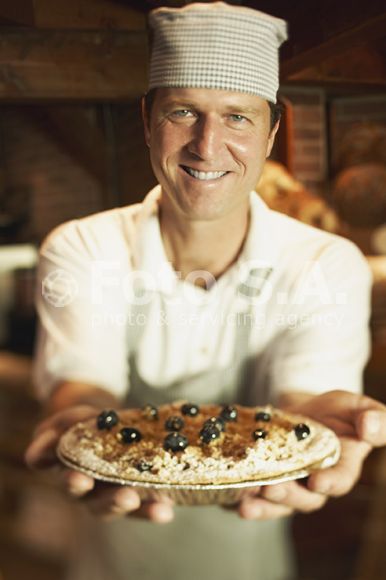
I Brought You A Pie!

Posted: 2nd December 2009 by admin in Uncategorized

This is a story about an American man living in Japan. He has lived in Japan for 2 years, and his Japanese has improved tremendously since he has first arrived. One day his wife baked an apple pie and asked him to take the pie for women’s bible study at their church.
He eagerly agreed because he wanted to practice what his Japanese language teacher has just taught him a week ago: “If you want to sound formal and polite, you need to put ‘o’ before the noun.” For example, flower in Japanese is “hana.” When you put “o” before the word, it will be “Ohana.”

As he walks to the church, he decided, “I am going to speak very polite Japanese.” He has arrived at the church and cleared his throat and said to the ladies, “O pie wo motte kimashita.” The ladies looked uncomfortable. Thinking they could not hear him, he said it even louder, “O pie wo motte kimashita.” The ladies looked even more uncomfortable and avoided making eye contact with him. The pastor, who was leading the bible study, seemed shocked and looked at him with disbelief.

Soon he realized that something went wrong. Now I want to ask those who read this blog. What happened?

A. His Japanese was grammatically correct, but his intonation was wrong.
B. He had a good intention, but his vocabulary was inappropriate.
C. His manner was very Americanized.

I will give you an answer after I get 5 comments 😉

Thinking Outside the Box

Posted: 2nd December 2009 by admin in Uncategorized

A few months ago at work we had a department meeting. In it, our managers were pressuring us about performance, as occurs anywhere.

To illustrate, one of them drew up on the board a participatory exercise in which we apparently showed ourselves unable to think outside the box.

As bad an indicator as I personally believe that is, I believe in the existence of a cultural box that many fail to think outside of. I have personally found this mostly with Americans I meet, though I’m sure it happens everywhere.

Consider the idea of traveling. Even somewhere where Americans often travel, Europe, is considered a faraway and exotic place. That distance, both geographically and culturally, places walls within their thought processes to going. Without actually researching the idea, Americans may stop themselves from going from the collective perspective they gather, that it’s a faraway place you may only travel to once in your life.

And this is for a relatively known place. Consider others, such as Africa and Asia, and they may as well be worlds away. Some Americans do get out, but nevertheless treat their experiences as necessarily once-in-a-lifetime. Students doing their one year abroad, or even retirees only after retirement finding the time and money to travel.

This, I believe, is inside-the-box thinking. It can happen to TCKs too, but generally their experience should teach them that it’s not that hard to travel, if you really want to.

In a sense, travel is a leap over empty air, in which you hope to land on solid ground at the other side. For TCKs, it wouldn’t be their first jump, so they know that there’s always ground when they land, it’s only a matter of what kind it is. But for many people who’ve never traveled or traveled only a little, every time they leave home it’s an adventure into the unknown.

I’ve met some people who travel with their eyes wide, a comic tourist, amazed at everything. I’ve met some who travel for the first time, but are unable to appreciate the real difference because, in their minds, they’re still at home. The latter was certainly the case when I heard from my aunt, who took her family to Paris for the first time in all their lives. Their summary was that Paris was “Cold, and everyone smoked.” Which is a horrible summary for as complex and varied a city such as Paris is.

But some never make it that far. To travel to another country is a daunting trip. In truth it isn’t, as many of us should know. It’s all a matter of what you’re willing to give up in time, money, or opportunity. When traveling to a new country there’s risk involved: Getting lost, not knowing the language, not knowing where to go, what to do. Tours minimize it, but also compartmentalize it. They box it up. You travel, see the sights, but never leave the comfort of being around other tourists.

To me, travel is about a different mindset. When you travel, the world around you changes. You start in one world, but you get on a plane, wait several hours in a little box, and then emerge to a world of difference. That affects the way you think, too, because your context has changed. The way you associate with people around you should, too, change. The whole point of travel is to expand your mind’s borders. Through experience, you realize how much is outside of your box, that you inadvertently enlarge it.

As TCKs, repatriation can affect the way we see it too. It’s easy to play along with the culture around you, and act as well like all countries are so far away and untouchable. But it serves us to remember that it’s not that hard. All you have to know is what it costs.

Uncle Dan’s Blog – Anew

Posted: 1st December 2009 by admin in Uncategorized

Greetings,

For those who may remember from TCKID’s old days, I am Uncle Dan. I had some interesting times providing advice to those who asked about anything in life. It started to feel uncomfortable though, as questions became far more searching, serious, and deserving of a professional voice. Nevertheless, I always have thoughts to write down.

For those unfamiliar with me, I begin with my background:

I was born in the US to a Vietnamese family. When I was 3 years old, I moved to Indonesia. I lived there until I was 18, going to a British International School for the entire time, graduating with the International Baccalaureate. I attempted to try American university life in the University of Michigan at Ann Arbor, but after a bit less than 2 years ended up moving to Switzerland, where my parents had moved in the meantime. There, I studied a Bachelor’s degree in International Business in Hospitality and Tourism Management from a little Hotelfachschule with over 40 nationalities, more or less reliving the TCK experience all over again.

I am currently working in Florida at a hotel as a manager-in-development, but am plotting to return to Europe, hopefully to re-align myself back into an area I take much more passion in: International Relations.

As my history suggests, I speak six languages: English, German, French, Spanish, Vietnamese and Indonesian. I am, however, only truly fluent in English. My German is pretty good, though I learned it in Switzerland and that accent permeates all my German. My French was great when I was 14 and… has deteriorated since. My Spanish reached its peak when I was 19, and I manage it shakenly. My Vietnamese was learned entirely from my family, and therefore informally. I can manage to read a menu, write basic words by guessing, and understand more by listening than I can form sentences on my own. My Indonesian was the product of living with house staff and basic school classes until I was 11.

I still enjoy refreshing them though, whenever I get the chance. And I enjoy picking up phrases in other languages. My roommate right now is Lebanese, and I have learned various phrases in Arabic. I have learned fun phrases in Swedish, Portuguese, Croatian, Bulgarian, Turkish, Mandarin, Cantonese, Japanese, Korean, Thai and… well others. I can’t think of them all.

I hope to continue to contribute to this interesting group!